Advanced Machine Learning
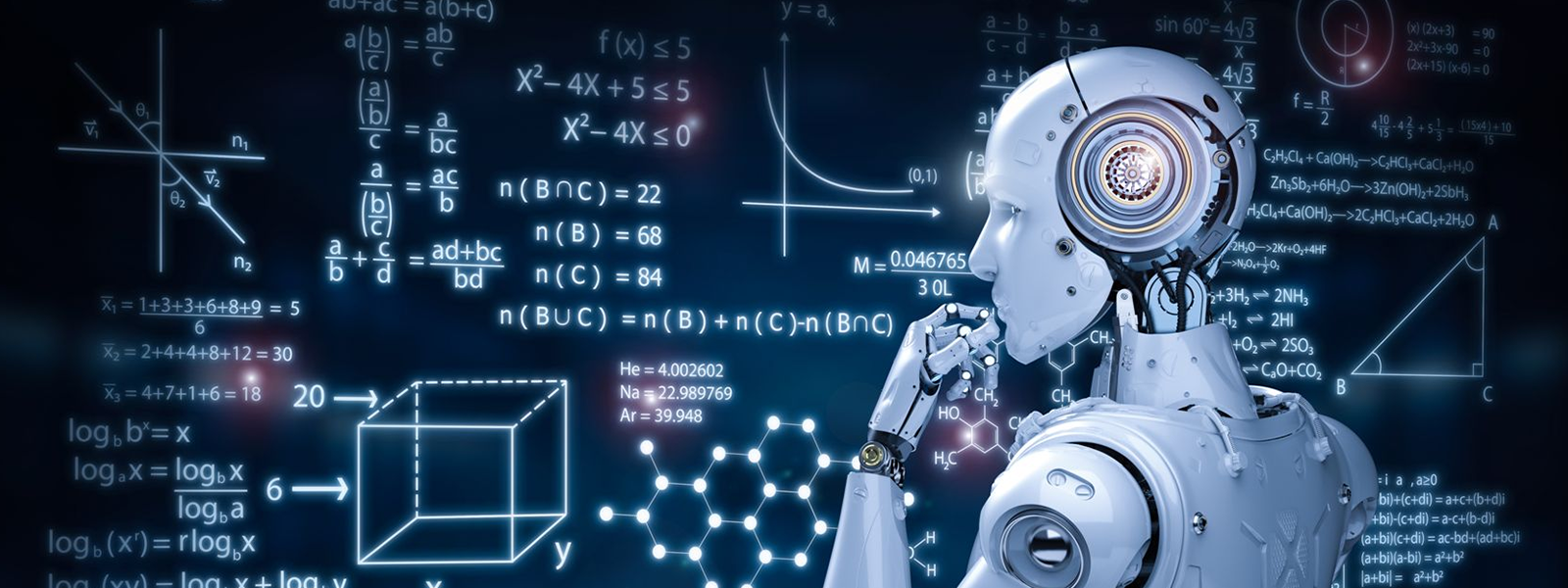
This course covers key concepts of machine learning including supervised and unsupervised learning, neural networks, and support vector machines. Pre-requisites include Linear Algebra, Calculus, and Basic Programming.
Course Contents
- •Introduction to Machine Learning: Supervised and unsupervised learning, Linear Regression, Hypothesis Function, Cost Function.
- •Gradient Descent for Linear Regression: Multiple variables, Feature Normalization, Polynomial Regression, Normal Equation.
- •Octave Tutorial: Basic operations, data plotting, control statements, functions, and vectorization.
- •Logistic Regression: Binary Classification, Decision Boundary, Advanced Optimization, Multiclass Classification (One-vs-all).
- •Regularization: Regularized Linear Regression, Initial Ones, Feature Vector, Constant Feature.
- •Neural Networks: Model Representation, Multiclass Classification, Non-linear Hypotheses, Neural Network Learning, Backpropagation Algorithm.
- •Neural Networks Implementation: Gradient Checking, Random Initialization, Training and implementation of Neural Networks for linear systems.
- •Applying Machine Learning: Evaluating Hypotheses, Model Selection, Diagnosing Bias vs. Variance, Regularization, Learning Curves.
- •Machine Learning System Design: Error Analysis, Precision Trade-Off, Error Metrics for Skewed Classes.
- •Support Vector Machines: Kernels, Multiclass Classification, SVM Parameters.
- •Unsupervised Learning: K-Means Algorithm, Optimization, Dimensionality Reduction, Principal Component Analysis.
- •Anomaly Detection: Gaussian Distribution, Multivariate Gaussian Distribution, Anomaly Detection Systems.
- •Recommender Systems: Content-Based and Collaborative Filtering, Large-scale Machine Learning with Big Data.
Course Learning Outcomes
- •Understand key concepts in supervised and unsupervised learning.
- •Implement and optimize machine learning algorithms such as regression and neural networks.
- •Apply machine learning techniques to real-world problems, including anomaly detection and recommender systems.
- •Analyze and interpret model performance using bias-variance trade-offs and error metrics.
- •Design and implement machine learning systems with a focus on scalability and large-scale data.